This is the coolest thing ever! Part of a GE marketing effort to promote "the Smart Grid;" you can create a visual 3-D hologram from a 2 dimensional piece of paper you print at home. It really,really works. Spin your hologram in a 180 degree angle for some really cool effects. Turn it upside down to get really freaky!
Note: You will need to install the latest version of Flash Player (free) to see the hologram in action.
Click here to get started.
Well worth the effort.
Showing posts with label science. Show all posts
Showing posts with label science. Show all posts
Monday, March 23, 2009


Tuesday, March 17, 2009
Consciousness On The Operating Table
 According to this article from Discover online, anesthesiologists may soon be able to gauge consciousness much as doctors gauge a patient’s temperature with a thermometer. Perhaps some of the mystery of consciousness itself—a question that has vexed philosophers for centuries—will be solved on the operating table.
I was looking forward to my first experience with anesthesia. I had been laid out on a stretcher, and nurses and doctors were prepping my midsection so they could slice it open and cut out my appendix. After a bout of appendicitis, a short vacation from consciousness seemed like a pleasant way to spend a few hours. I had no idea what anesthesia would actually feel like, though, and suddenly I was seized by skepticism. I tried to hoist myself up, already swabbed in iodine, as I suggested that I ought to pop into the men’s room before the scalpels came out. I wouldn’t want to interrupt the surgery with a bathroom break. “Don’t worry,” one of the nurses replied. “We’ll do that for you.”
I lay back down, puzzling over that. After a nurse put the IV into my hand, I had to interrupt again: The anesthesia flowing into my arm was not working. I just couldn’t believe that anything would keep me asleep while someone was knitting up my intestines. The nurses and doctors nodded in my direction as I tried to explain the problem to them, but I was sure they weren’t taking me seriously. I took a long, slow blink. And then there were no doctors and nurses around me. I was lying alone in a new room, recovering from my surgery.
Ever since that experience, I’ve wondered what exactly happened in my head. It didn’t feel like sleep. It was not a blackout, either. It was as if the surgeons had simply cut a few hours out of my life and joined together the loose ends. So I decided to get more familiar with the science behind anesthesia. To my surprise, I discovered that anesthesiologists are a bit in the dark themselves. “How anesthesia works has been a mystery since the discovery of anesthesia itself,” writes Michael Alkire, an anesthesiologist at the University of California at Irvine School of Medicine, in the new Encyclopedia of Consciousness.
The first public demonstration of anesthesia during surgery took place in 1846 in Boston. A man named Gilbert Abbott took some deep drafts of ether, and surgeons began cutting a tumor off his jaw. The audience was shocked that Abbott did not scream and squirm. One London newspaper expressed the amazement that many must have felt: “Oh, what delight for every feeling heart to find the new year ushered in with the announcement of this noble discovery of the power to still the sense of pain and veil the eye and memory from all the horrors of an operation.”
Today anesthesiologists have a number of drugs to choose from, as well as machines to administer them safely. Every year tens of millions of people get general anesthesia. In 2008 Columbia University epidemiologist Guohua Li reported that each year only one person in a million suffers an anesthesia-related death in the United States. But for all these achievements, anesthesia remains deeply puzzling.
To begin with, anesthesiologists have no precise way to determine when people lose consciousness. In Abbott’s day, doctors would simply ask their patients to respond, perhaps by opening their eyes. A lack of response was taken as a sign of unconsciousness. Many modern anesthesiologists talk to their patients, but judging the response is made more complicated by the muscle relaxants that they also use. Sometimes the anesthesiologist will use a blood pressure cuff on a patient’s arm to block the muscle relaxants in the bloodstream. Then the doctor asks the patient to squeeze a hand.
This sort of test can distinguish between a patient who is awake and one who is out cold. But at the borderline of consciousness, it is not very precise. The inability to raise your hand, for example, doesn’t necessarily mean that you are unconscious. Even a light dose of anesthesia can interfere with your capacity to keep new pieces of information in your brain, so you may not respond to a command because you immediately forgot what you were going to do. On the other hand, squeezing an anesthesiologist’s hand may not mean you’re wide awake. Some patients who can squeeze a hand will later have no memory of being aware.
Seeking a more reliable measuring stick, some researchers have started measuring brain waves. When you are awake, your brain produces fast, small waves of electrical activity. When you are under total anesthesia, your brain waves become deep and slow. If you get enough of certain anesthetics, your brain waves eventually go flat. Most anesthesiologists monitor their patients using a machine known as a bispectral index monitor, which reads brain waves from electrodes on a patient’s scalp and produces a score from 100 to 0. But these machines aren’t precise either. Sometimes patients who register as unconscious can still squeeze a hand on command.
The problem with all these methods is that anesthesiologists don’t really know what it is they are trying to measure. So Alkire and other scientists are using neuroimaging to peer into the anesthetized brain to see what happens when it succumbs. In a typical experiment, a volunteer lies in an fMRI brain scanner, which can measure the amount of oxygen used in different parts of the brain. A researcher gives the volunteer anesthesia and measures how those brain regions respond.
+++
Such studies find that the entire brain powers down on anesthesia, its activity dropping between 30 and 60 percent. The results are somewhat ambiguous, since brain regions respond differently to different drugs. But one region consistently becomes quieter than average: a grape-size cluster of neurons almost dead center in the brain known as the thalamus.
Is the thalamus the brain’s power switch? It certainly has the right stuff for the job. A thicket of neurons sprout from the thalamus and branch across the cortex, the outer layer of the brain where we interpret the information from our senses and make decisions, then back into the thalamus. As the brain’s sensory relay station, the thalamus is responsible for sending rousing signals to the cortex when we wake up from ordinary sleep. In 2007 Alkire and his collaborators probed the role of the thalamus by putting rats in a box flooded with anesthetics, which caused the animals to keel over. If Alkire and his colleagues then injected a tiny dose of nicotine into the thalamus, the rats immediately came to and stayed conscious even as they continued to inhale the anesthetics.
Yet studies on patients with Parkinson’s disease show that the thalamus cannot completely explain how anesthesia works. Surgeons can treat Parkinson’s by implanting electrodes deep inside the brain. These electrodes release pulses of current to tamp down the wild movements associated with the disease. Lionel Velly, an anesthesiologist at Mediterranean University in Marseille, France, ran an experiment in which he used the electrodes in the other direction, to record electrical activity in the brain.
In a second surgical procedure less than a week after the brain surgery, Velly and his colleagues took readings from the deep-brain electrodes in 25 patients while also collecting electrode readings from their scalp. The scalp recordings let the scientists monitor the cortex, while the deep-brain electrodes let them monitor the thalamus. Velly’s team found that the cortex started producing deep, slow waves as soon as patients became unresponsive. The thalamus, on the other hand, didn’t change for another 15 minutes. The pattern Velly saw was the reverse of what you would expect if the thalamus were the brain’s master switch.
The secret of anesthesia may lie not in any single clump of neurons but in the conversations taking place between many clumps in the brain.
Giulio Tononi, a University of Wisconsin neuroscientist, suggests that the secret of anesthesia may not in fact lie in any single clump of neurons. It may lie instead in the conversations that take place between many clumps in the brain. Normally information from our senses races from one region of the cortex to another, getting processed in different ways in each place. Some regions help us recognize faces in a scene, for example, while other regions help us figure out what emotions those faces are expressing. The sensory signals travel through a mass transit system made up of long branches of neurons that crisscross the brain. This system has a few hubs through which many connections pass. One is the thalamus, but certain parts of the cortex also serve as hubs.
Although the brain may become less active under anesthesia, it usually doesn’t shut down completely (if it did, we would die). In fact, when scientists played a tone into the ears of an anesthetized cat, its cortex still produced strong bursts of electricity. But its responses were different from those of a waking cat. In an anesthetized cat, the brain responds the same way to any sound, with a noisy crackle of neurons. In a waking cat, the response is complex: One brain region after another responds as the animal processes the sound, and different sounds produce different responses. It’s as if the waking brain produces a unique melody, whereas the anesthetized brain can produce only a blast of sound or no sound at all.
Tononi suggests that this change happens because anesthesia interferes with the brain’s mass transit system. Individual parts of the cortex can still respond to a stimulus. But the brain can’t move these signals around to other parts to create a single unified experience.
Tononi argues that the difference between brain music and brain noise defines the very nature of consciousness. Consciousness is the brain’s ability to be in a complex state, even in response to a simple stimulus like a tone. The vast number of different states our brains can enter when we are aware gives consciousness its marvelously rich feeling. In order to produce those states, the brain needs lots of neural elements that are active and able to respond, as well as the mass transit system that links them all together.
Working from this hypothesis, Tononi and his colleagues are trying to develop tools that can monitor levels of consciousness in anesthetized patients. They are also developing software to measure the complexity of the brain’s responses to stimuli. If Tononi’s idea is correct, anesthesiologists may be moving toward being able to gauge consciousness much as doctors gauge a patient’s temperature with a thermometer. Perhaps some of the mystery of consciousness itself—a question that has vexed philosophers for centuries—will be solved on the operating table.
Wednesday, May 14, 2008
God, Einstein, and I quote...
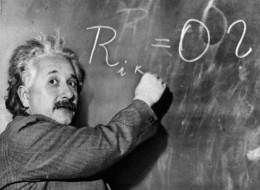 Warriors, both of science and of faith, have for years played a tug-of-war for the heart and soul of Albert Einstein. We all knew from early on that his mind belonged to science, but what of his true essence, his belief in something grander than the playground that is our cosmos.
Currently, there is an auction making some noise in the halls of science and cheering up its atheist practitioners. The auction is of a personal letter Albert Eistein wrote in 1954 (one year prior to his passing) that "unequivocally" states his disbelief in God.
Dr. EInstein writes,
"The word God is for me nothing more than the expression and product of human weaknesses, the Bible a collection of honourable, but still primitive legends which are nevertheless pretty childish."He also goes on to say in the letter written to the philosopher Eric Gutkind,
"No interpretation no matter how subtle can (for me) change this."Frankly, I don't see this "new" letter to be revealing anything we didn't already know about our quotable pal, Einstein. Einstein made it clear on several occasions that he did not ascribe to the Abrahamic concept of God, most famously in his "Spinoza" quote,
"I believe in Spinoza's God who reveals himself in the orderly harmony of what exists, not in a God who concerns himself with the fates and actions of human beings."Einstein, in addition to his brilliant observations in physics, also made some profound philosophical observations. It is these more romantic and social leanings which often places Einstein in the middle of this battle of beliefs. Einstein once famously stated,
"Science without religion is lame, religion without science is blind."Then there is his most confusing quote about God,
"I want to know how God created this world. I am not interested in this or that phenomenon, in the spectrum of this or that element. I want to know his thoughts. The rest are details."However, my favorite Einstein quote, which not only establishes his disbelief in an Abrahamic God, but also distances himself from the rhetoric of hardcore atheists is this one,
"I have repeatedly said that in my opinion the idea of a personal God is a childlike one, but I do not share the crusading spirit of the professional atheist whose fervor is mostly due to a painful act of liberation from the fetters of religious indoctrination received in youth. I prefer an attitude of humility corresponding to the weakness of our intellectual understanding of nature and of our own being.To me, this quote is the essence of Einstein - a respect and humility for human kind and an understanding that our knowledge of nature, its order and the further discoveries that await us, are what give rise to passionate living.
Truthfully, I hope everyone stops quoting Albert Einstein after this auction. It's time we took the question of "consciousness survival" out of the hands of scientists, and put it back into the hands of science.
Read more on the auction of Albert Einstein's letter
Thursday, September 20, 2007
Talking Consciousness
 Courtesy of famed neuroscientist, Christof Koch and his Klab we have a wonderful compilation of definitions of terms used in the study of consciousness.
Friday, August 17, 2007
Who's Afraid of the Afterlife?
 The following is an abstract of a paper written by Dr. Neal Grossman. The article appears in the first issue of AntiMatters, a quarterly open-access journal addressing issues in science and the humanities from non-materialistic perspectives.
The evidence for an afterlife is sufficiently strong and compelling that an unbiased person ought to conclude that materialism is a false theory. Yet the academy refuses to examine the evidence, and clings to materialism as if it were a priori true, instead of a posteriori false. I suggest several explanations for the monumental failure of curiosity on the part of academia. First, there is deep confusion between the concepts of evidence and proof. Second, materialism functions as a powerful paradigm that structures the shape of scientific explanations, but is not itself open to question. The third explanation is intellectual arrogance, as the possible existence of disembodied intelligence threatens the materialistic belief that the educated human brain is the highest form of intelligence in existence. Finally, there is a social taboo against belief in an afterlife, as our whole way of life is predicated on materialism and might collapse if near-death experiences, particularly the life review, was accepted as fact.
PDF link to Dr. Grossman's article
Monday, June 18, 2007
AfterlifeFM - Interview with Alex Tsakiris

I'm inviting you to listen to yours truly for the AfterlifeFM debut. My guest was Alex Tsakiris, host of the magnificent podcast, Skeptiko.com.
Friday, June 15, 2007
Queerer than we can suppose.
No matter what you think of Richard Dawkins or his philosophy and (non)beliefs, there is no doubt he is one of the most thought-provoking, entertaining and convincing thinkers of our times. The video below is just another example of how Dawkins has managed to set himself up as the leading voice of thought in the Western world.
Personally, I think he got it right at the beginning of this video when he quotes British geneticist, J.B.S. Haldane, in his revision of a quote from Hamlet.
Personally, I think he got it right at the beginning of this video when he quotes British geneticist, J.B.S. Haldane, in his revision of a quote from Hamlet.
"I suspect that there are more things in heaven and earth than are dreamed of, or can be dreamed of, in any philosophy. That is the reason why I have no philosophy myself, and must be my excuse for dreaming."J.B.S. Haldane
Friday, June 8, 2007
An olympic-sized eyesore & me
 The Pickards has a wonderfully amusing blog post on the public outcry over the London 2012 Olympic logo selection. Even if you don't care about the Olympics, the English or graphic design, I still think you'll get a kick out of this rant.
So what does this all have to do with consciousness, life after death or moi? Well, Jack Pickard also wrote a little piece on me called, The Medium is the Message. Fortunately, I seemed to have weathered his biting wit a wee better than the official London 2012 logo.
Monday, June 4, 2007
V is for Vaccine
 We didn't vaccinate our daughter Nina, well, not until she was a month past two. In April of this year, I was guilt fed and coerced by her new pediatrician into giving her the Hib vaccine and Prevnar (pneumococcal).
It's not that my wife and I don't want to vaccinate. We just want the freedom to choose how we vaccinate. So now that my son Waylon is here, we are once again pressured (and accosted) to make a determination about how we plan on vaccinating our child.
Trust me, I've done as much research as a lay person can on this subject. I understand both sides to the argument. I acknowledge that some vaccines have greatly reduced if not eliminated certain diseases from childhood experience. However, there is also that mysterious element out there which worries me greatly... some of you know it better as the unknown.
As a medium, I know about the unknown. Almost all scientists would tell me that I was full of shit if I tried to explain to them how it is that I can communicate with the consciousness of the dead. So you see, I have personal experience telling me that, as well-intended as science may be, it isn't always right.
My big concern about vaccinations is that the schedule is too aggressive for a baby's body. More importantly, there has not been a single long-term study done to explain the "explosion of neurologic and immune system disorders in our nation’s children." since the widespread introduction of public immunization. Here is a webpage that explains this concern far better than I ever could.
I truly welcome all opinion, criticism or spiritual support on this.
Sunday, June 3, 2007
Hello, brain!
Brain exploration is about to revolutionize and redefine science, medicine, capitalism and possibly daytime soap operas. At least that's what Charlie Rose and his illustrious panel of brain experts say.
Below is Part One of Charlie Rose's series on science and the brain.
Below is Part One of Charlie Rose's series on science and the brain.
From Freud to the mysteries of the human brain. Topics include Sigmund Freud and the study of psychoanalytics, information storage and processing, learning, remembering, perception, thinking, feeling, and behavior. Panelists include: Paul Nurse, Eric Kandel, Aaron Beck, Steven Roose, Peter Fonagy, Nancy Kanwisher, Nora Volkow, Rebecca Saxe and Liz Phelps.
Thursday, May 10, 2007
Talking Mind
 Here's yet another little project of mine. It's called TalkingMind.com, a bi-monthly roundup of independent audio podcasts that explore the science, spirituality, philosophy, mystery and controversy of human consciousness.
Tune in as skeptics and believers debate the mysteries of the mind (available for ipod download or online listening).
Monday, May 7, 2007
PSI Wars
Dean Radin and The Institute of Noetic Sciences are in full force so to speak in this Star Wars spoof that tackles the very real battle between reductionist materialism and paraspychology.
Sure, I usually like my animation without the quantum geek factor, but this is worth the silly entertainment value.
Sure, I usually like my animation without the quantum geek factor, but this is worth the silly entertainment value.
Tuesday, April 17, 2007
The Science of Mind
 I'm happy to announce a belated "Welcome Back" to Matthew Cromer and his very informative blog, Science is A Method, Not A Position, otherwise known as AMNAP.
In his most recent posting, Matthew Cromer continues his analysis of reductionist thinking with a thought provoking post on The Mental Universe...
"The 1925 discovery of quantum mechanics solved the problem of the Universe’s nature. Bright physicists were again led to believe the unbelievable — this time, that the Universe is mental. According to Sir James Jeans: “the stream of knowledge is heading towards a non-mechanical reality; the Universe begins to look more like a great thought than like a great machine.
Subscribe to:
Posts (Atom)